Best Book for Human Psychology (2026): 5 Picks Compared
Five psychology books compared by fit, contents and edition, from a broad psychology primer to a classic psychoanalysis text and a speaking guide.


At a glance
Top picks
As an Amazon Associate I earn from qualifying purchases. How we score
A first-year psychology student, a reader curious about why people act the way they do, or an adult who wants a sharper sense of others may each need the best book for human psychology. This list compares the picks by what each Amazon listing publishes: the description, the page count, the publication date and any series or edition line. The Shelf Score weighs fit, contents and edition, and value, so you can match a book to one reader rather than to the whole field.
ShelfAnswers earns a commission when you buy through links on this page, at no extra cost to you. As an Amazon Associate I earn from qualifying purchases. Affiliate disclosure.
Quick picks
- Best Overall Psych 101 by Kleinman: Broad psychology basics and quizzes in one illustrated volume of 288 pages Check price
- Best Classic Read Psychopathology by Freud: Freud’s account of everyday slips and forgotten names, 240 pages Check price
- Best for Reading Body Language What Every Body Is Saying by Navarro: Nonverbal cues from a former FBI counterintelligence officer, 250 pages Check price
- Best for Manipulation Tactics Dark Psychology by Cooper: Covert manipulation and persuasion in 333 pages with a narrow focus Check price
- Best for Speaking Skills Highly Effective People Speak by Andrei: Speaking and persuasion with psychology framing, Book 1 of 14 in a series Check price
Compare the picks
| Book | Shelf Score | Author | Pages | Published |
|---|---|---|---|---|
| Psych 101 by Kleinman | 8.6/10 | Paul Kleinman | 288 | September 18, 2012 |
| Psychopathology by Freud | 8.0/10 | Sigmund Freud | 240 | May 1, 2021 |
| What Every Body Is Saying by Navarro | 7.9/10 | Joe Navarro | 250 | April 15, 2008 |
| Dark Psychology by Cooper | 7.6/10 | William Cooper | 333 | June 2021 |
| Highly Effective People Speak by Andrei | 7.5/10 | Peter Andrei | 363 | May 29, 2020 |
Book details as published on each listing, collected 15 October 2026.
The picks
| # | Product | Shelf Score | Buy |
|---|---|---|---|
| 1 |  Psych 101 by Kleinman Psych 101 by Kleinman | 8.6/10 | Buy |
| 2 |  Psychopathology by Freud Psychopathology by Freud | 8.0/10 | Buy |
| 3 |  What Every Body Is Saying by Navarro What Every Body Is Saying by Navarro | 7.9/10 | Buy |
| 4 |  Dark Psychology by Cooper Dark Psychology by Cooper | 7.6/10 | Buy |
| 5 | 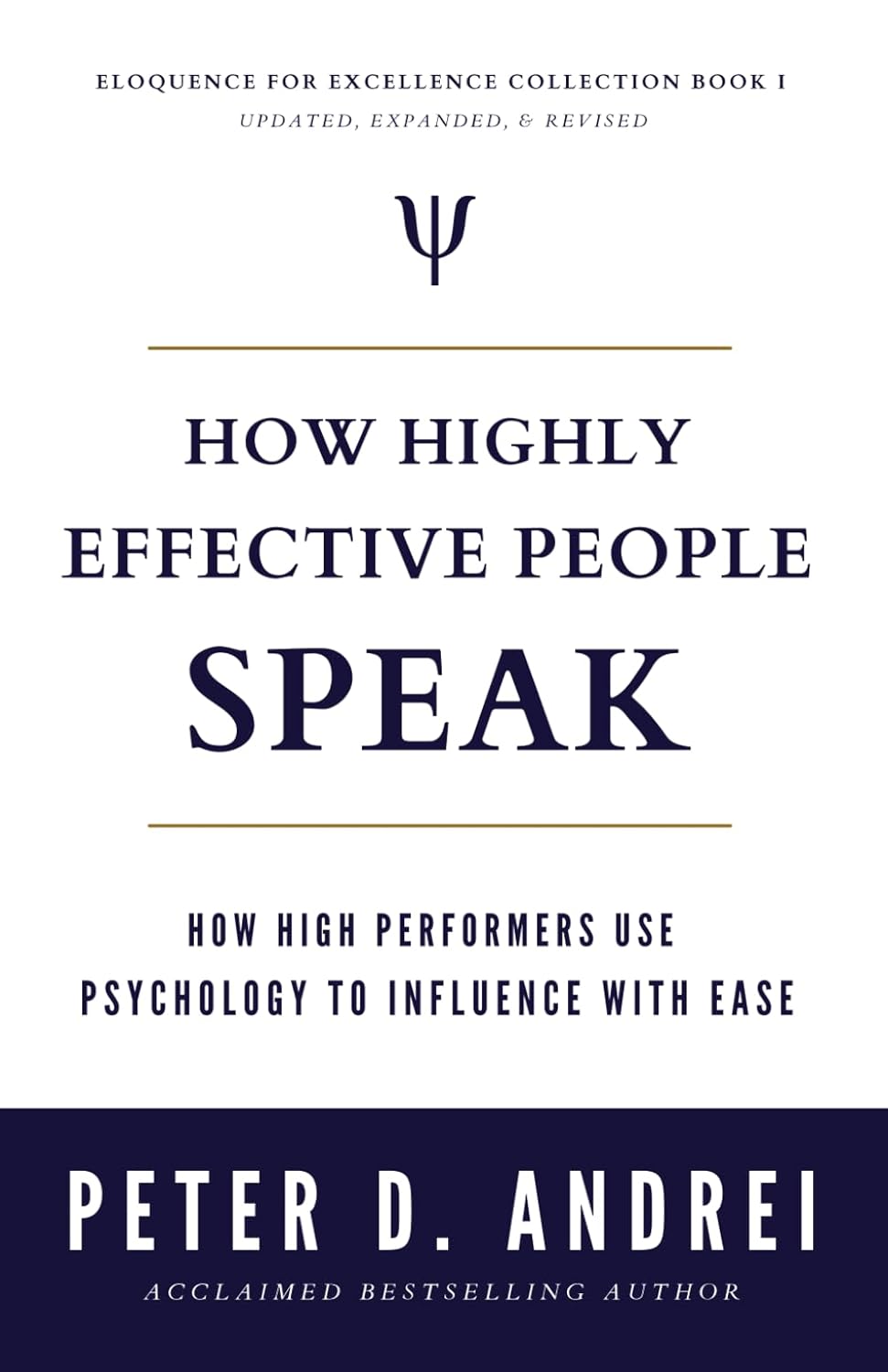 Highly Effective People Speak by Andrei Highly Effective People Speak by Andrei | 7.5/10 | Buy |
Psych 101 by Kleinman
A lighter primer on psychology basics, theories and experiments, with quizzes throughout.
Pros
- Covers basic theories, principles and experiments in one volume
- Hundreds of quizzes and psychology basics, according to the description
- Covers topics from personality quizzes to stages of development, per the description
- Presented as a lighter read than a standard textbook, per the description
Cons
- Published September 18, 2012, so check for a newer edition before buying
- The title lists statistics, but the description says the book leaves most of them out
- No reading age or grade level is stated
- A primer, so less depth for a reader who wants research detail
Detailed Review
The description presents an introduction to psychology that trades dense textbook discussion for lighter explanations of theories, principles and experiments. It covers personality quizzes, the Rorschach test and B.F. Skinner, among other topics. The listing gives 288 pages, an illustrated edition and a publication date of September 18, 2012. The title lists statistics, but the description says the book cuts most of them, so check the contents before buying if you need numbers.
Who it's for: a beginner who wants a broad overview of psychology with quizzes along the way. Who should skip it: a reader who needs current research or deep theory, since the listing dates to 2012 and the description calls it a primer.
Its Shelf Score of 8.6/10 comes from fit 32/35, contents and edition 20/25, value 21/25 and reading age or level not scored (no reading age or level stated).
Book Details
| Author | Paul Kleinman |
|---|---|
| Print length | 288 pages |
| Published | September 18, 2012 |
| Publisher | Adams Media |
| Reading age | Not stated |
Details as published on the retailer listing, collected 15 October 2026. Editions and formats change; check the listing before you buy.
Reading Age and Edition
What this listing states. No reading age, grade level or skill level is stated, so that criterion is not scored. Books carry no warranty, so warranty is not part of the score. See How We Pick.
Check the edition and format. Covers, editions and formats change. Match the edition or ISBN your reader, class or club needs on the listing.
Listed reading ages and grade levels are a guide, not advice about a particular reader. Editions and formats change, so check the listing before you buy. See our Reading Age Disclaimer.
Psychopathology by Freud
Freud's study of everyday slips and forgotten names as clues to unconscious motives.
Pros
- 240 pages in a short single volume, per the listing
- Uses everyday slips and forgotten names as examples, per the description
- Draws on personal anecdotes and patient cases, per the description
- Places ordinary errors in a wider account of the unconscious mind
Cons
- Theory-focused, so it offers less practical self-help than newer guides
- The listing states no edition
- No reading age or grade level is stated
- Built on psychoanalytic theory, which the description presents as a classic rather than current research
Detailed Review
The description says Freud looks at the unconscious forces behind everyday slips, forgotten names, misreadings and misplaced objects. It uses personal anecdotes and patient cases, and calls the work a cornerstone of psychoanalytic theory. The listing gives 240 pages, a publication date of May 1, 2021 and the publisher Fingerprint, with no edition stated.
Who it's for: a curious reader who wants the classic psychoanalytic view of everyday mistakes. Who should skip it: a reader who wants current research, since the description frames the book as a classic work of psychoanalysis.
Its Shelf Score of 8.0/10 comes from fit 29/35, contents and edition 20/25, value 19/25 and reading age or level not scored (no reading age or level stated).
Book Details
| Author | Sigmund Freud |
|---|---|
| Print length | 240 pages |
| Published | May 1, 2021 |
| Publisher | Fingerprint |
| Reading age | Not stated |
Details as published on the retailer listing, collected 15 October 2026. Editions and formats change; check the listing before you buy.
Reading Age and Edition
What this listing states. No reading age, grade level or skill level is stated, so that criterion is not scored. Books carry no warranty, so warranty is not part of the score. See How We Pick.
Check the edition and format. Covers, editions and formats change. Match the edition or ISBN your reader, class or club needs on the listing.
Listed reading ages and grade levels are a guide, not advice about a particular reader. Editions and formats change, so check the listing before you buy. See our Reading Age Disclaimer.
What Every Body Is Saying by Navarro
A guide to reading nonverbal cues in others, written by a former FBI counterintelligence officer.
Pros
- Focused on nonverbal behavior, a clear and specific topic
- Written by a former FBI counterintelligence officer, per the description
- 250 pages, a moderate length for one volume
- Covers trust and authority signals, per the description
Cons
- Published April 15, 2008, the oldest date among the five picks
- Body language focus, so less coverage of general psychology
- No reading age or grade level is stated
- The description leans on sales language, so check the contents before buying
Detailed Review
The description says Joe Navarro, a former FBI counterintelligence officer, explains how to read nonverbal behavior, from thumbs and feet to eyelids. It also says body language shapes how bosses, family and strangers see you. The listing gives 250 pages, a 1st edition and a publication date of April 15, 2008.
Who it's for: a reader who wants practical observation skills at work or with family. Who should skip it: a reader who wants current research on the subject, since the listing is dated 2008.
Its Shelf Score of 7.9/10 comes from fit 28/35, contents and edition 19/25, value 20/25 and reading age or level not scored (no reading age or level stated).
Book Details
| Author | Joe Navarro, Marvin Karlins |
|---|---|
| Print length | 250 pages |
| Published | April 15, 2008 |
| Publisher | William Morrow Paperbacks |
| Reading age | Not stated |
Details as published on the retailer listing, collected 15 October 2026. Editions and formats change; check the listing before you buy.
Reading Age and Edition
What this listing states. No reading age, grade level or skill level is stated, so that criterion is not scored. Books carry no warranty, so warranty is not part of the score. See How We Pick.
Check the edition and format. Covers, editions and formats change. Match the edition or ISBN your reader, class or club needs on the listing.
Listed reading ages and grade levels are a guide, not advice about a particular reader. Editions and formats change, so check the listing before you buy. See our Reading Age Disclaimer.
Dark Psychology by Cooper
A guide to covert manipulation, persuasion and mind control, with chapters on recognizing manipulators.
Pros
- Narrow, specific focus on covert manipulation and deception
- Case studies and user profiles, per the description
- Described as a second edition, revised and corrected
- Chapters on boundaries and recognizing manipulators, per the description
Cons
- Two publication dates: October 29, 2020 in the spec table and June 2021 in the description
- Two page counts: 333 in the description and 335 in the spec table
- Mature themes: emotional abuse and abusive partners appear in the description
- Less general psychology than the other picks, since it centers on manipulation
Detailed Review
The description says the book explains covert manipulation and persuasion tactics, how to recognize deception and how to set boundaries in relationships. It includes case studies, user profiles and a bonus chapter on influence tricks. The description gives 333 pages and a second edition dated June 2021, while the spec table gives 335 pages and a publication date of October 29, 2020; this review uses the description's figures. The description also covers emotional abuse, an abusive partner and toxic relationships, so check before buying for a younger reader.
Who it's for: an adult who wants to recognize manipulation at work or in a relationship. Who should skip it: a reader who wants a general overview of psychology, or anyone who prefers to avoid abuse themes.
Its Shelf Score of 7.6/10 comes from fit 24/35, contents and edition 20/25, value 20/25 and reading age or level not scored (no reading age or level stated).
Book Details
| Author | William Cooper |
|---|---|
| Print length | 333 pages |
| Published | June 2021, per the description |
| Publisher | Independently published |
| Reading age | Not stated |
Details as published on the retailer listing, collected 15 October 2026. Editions and formats change; check the listing before you buy.
Reading Age and Edition
What this listing states. No reading age, grade level or skill level is stated, so that criterion is not scored. Books carry no warranty, so warranty is not part of the score. See How We Pick.
Check the edition and format. Covers, editions and formats change. Match the edition or ISBN your reader, class or club needs on the listing.
Listed reading ages and grade levels are a guide, not advice about a particular reader. Editions and formats change, so check the listing before you buy. See our Reading Age Disclaimer.
Highly Effective People Speak by Andrei
A communication guide that applies psychology to speaking, framing and persuasion.
Pros
- Focused on speaking, framing and objection handling
- Diagrams and visuals and real-world examples, per the spec table
- Series position stated: Book 1 of 14
- Updated and expanded with 100+ new diagrams, per the description
Cons
- The title promises psychology, but the description centers on speaking
- Part of a 14-book series, so the full set is long if you read on
- Published May 29, 2020, so check for a newer edition
- No reading age or grade level is stated
Detailed Review
The description says the book teaches speaking and persuasion through psychology and neuroscience, with a named framework and strategies for meetings, pitches and negotiations. It also cites 70+ peer-reviewed psychology studies without naming them in the description. The title says the book is about psychology, but most of the description is about speaking. The listing gives 363 pages, Book 1 of 14 in the Eloquence for Excellence series and a publication date of May 29, 2020.
Who it's for: a professional who wants speaking, framing and negotiation strategies for work. Who should skip it: a reader who wants a psychology overview, since the description centers on communication.
Its Shelf Score of 7.5/10 comes from fit 23/35, contents and edition 21/25, value 19/25 and reading age or level not scored (no reading age or level stated).
Book Details
| Author | Peter Andrei |
|---|---|
| Print length | 363 pages |
| Published | May 29, 2020 |
| Series | Book 1 of 14 |
| Reading age | Not stated |
Details as published on the retailer listing, collected 15 October 2026. Editions and formats change; check the listing before you buy.
Reading Age and Edition
What this listing states. No reading age, grade level or skill level is stated, so that criterion is not scored. Books carry no warranty, so warranty is not part of the score. See How We Pick.
Check the edition and format. Covers, editions and formats change. Match the edition or ISBN your reader, class or club needs on the listing.
Listed reading ages and grade levels are a guide, not advice about a particular reader. Editions and formats change, so check the listing before you buy. See our Reading Age Disclaimer.
As an Amazon Associate I earn from qualifying purchases.
How we scored them
The Shelf Score weighs fit for the reader, contents and edition, value, and the listed reading age or level where one is given. None of the five picks lists a reading age or grade level, so that part of the score is zero for every book. How we pick explains the weights.
| Book | Shelf Score | Fit /35 | Contents /25 | Value /25 | Age/level /10 |
|---|---|---|---|---|---|
| Psych 101 by Kleinman | 8.6 | 32 | 20 | 21 | n/a |
| Psychopathology by Freud | 8.0 | 29 | 20 | 19 | n/a |
| What Every Body Is Saying by Navarro | 7.9 | 28 | 19 | 20 | n/a |
| Dark Psychology by Cooper | 7.6 | 24 | 20 | 20 | n/a |
| Highly Effective People Speak by Andrei | 7.5 | 23 | 21 | 19 | n/a |
Scores run from 0 to 10. Reading age or level counts on a list where at least one listing gives one, and a book whose listing gives none then scores zero on it. Where no listing gives one, the score is taken over the other 85 points. Books carry no warranty, so warranty is not scored.
How to choose the best book for human psychology
Match the book to your goal
Psych 101 is the broadest starting point, with psychology basics and quizzes across 288 pages. Freud’s Psychopathology of Everyday Life suits a reader who wants classic psychoanalytic theory, the Navarro book focuses on body language, and the Cooper book focuses on manipulation tactics. If your goal is speaking and persuasion, the Andrei book is built for that, and the leadership book list covers related reading for managers.
Theory or practice
Freud and Psych 101 lean toward theory and explanation. Navarro, Cooper and Andrei lean toward skills a reader can use in conversation, though the listings describe them differently: the Cooper description focuses on spotting and resisting manipulation, while the Andrei description is about how to speak. For a wider view of the field, see the psychology picks.
Check the publication date
The listings here range from April 15, 2008 for the Navarro book to June 2021 for the Cooper book, as its description gives it. Older dates do not rule out a book, but check the listing for a newer edition before you buy, and read the edition line where one is given: the Navarro listing is a 1st edition, and the Cooper description names a second edition.
Before you buy
- Compare the publication date on the listing with the date in the description, since the Cooper listing gives two different dates.
- Check the page count against the description, since the Cooper listing gives 333 pages in one place and 335 in another.
- Look for mature themes before giving a book to a younger reader: the Cooper description mentions emotional abuse and abusive partners.
- Confirm the series order if you want more than one book: the Andrei listing gives Book 1 of 14.
Frequently Asked Questions
Which book should a beginner start with?
Psych 101 by Kleinman is the broadest of the five, covering psychology basics, theories and experiments in 288 pages. The description also says it includes hundreds of quizzes.
Is the Freud book a good choice for everyday psychology?
Psychopathology of Everyday Life, listed at 240 pages, explains slips, forgotten names and misplaced objects as clues to unconscious motives. Because the description frames it as a classic psychoanalytic text, pair it with a newer guide if you want current research.
Which edition should I buy?
Check the publication date and the edition line on the listing. The Navarro book is a 1st edition from 2008, and the Cooper description names a second edition dated June 2021.
Do any of these focus on speaking?
Yes. How Highly Effective People Speak by Andrei is about speaking and persuasion, while the Navarro book focuses on reading nonverbal cues in others.
Related lists
See every Self-Improvement list and all Nonfiction lists.
More lists: relationship books, manager books and entrepreneur books.