Best Finance Books for Teens (2026): 5 Compared
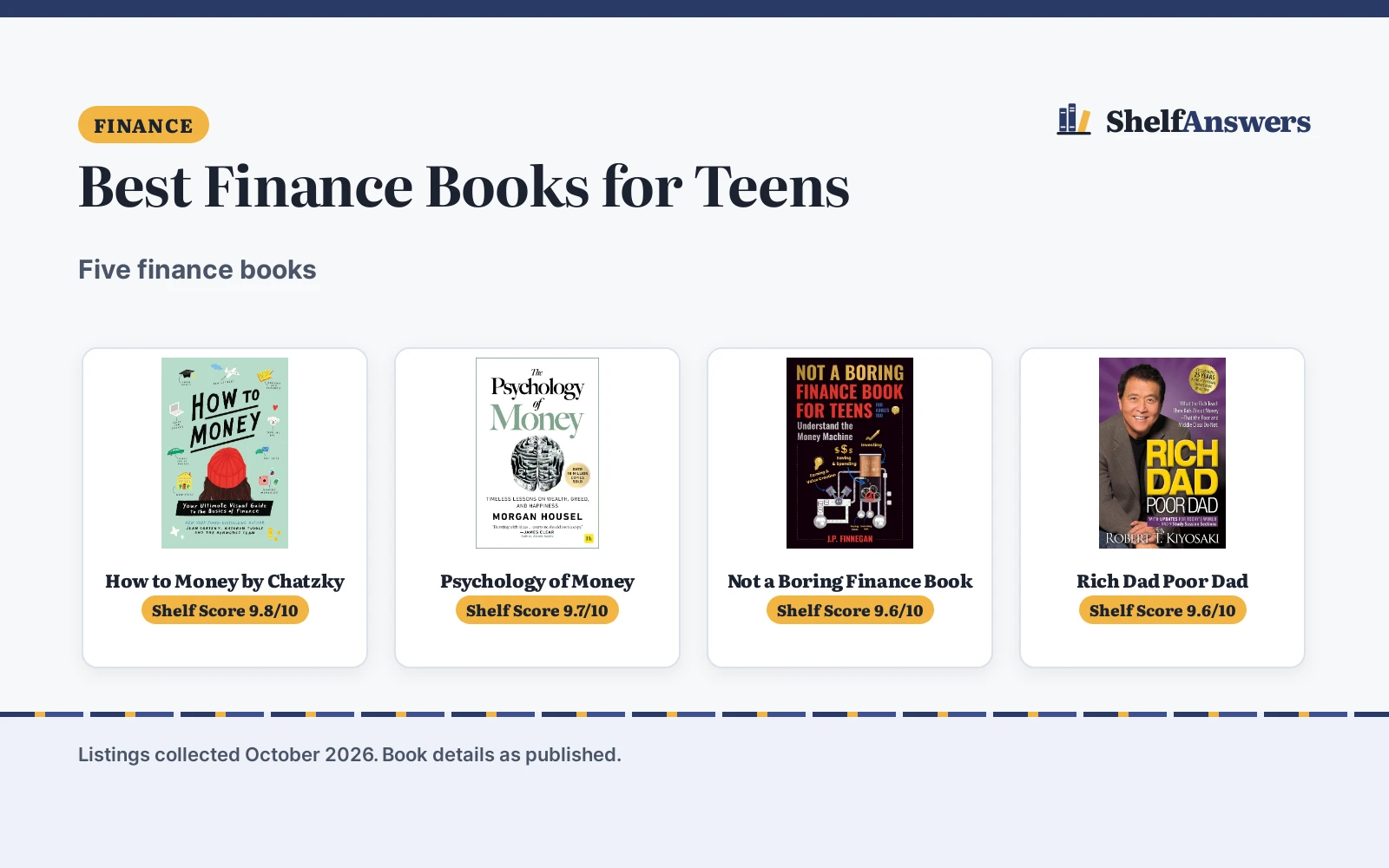
Five finance books for teens compared by author, page count, reading age, publisher and publication date.

At a glance
Top picks
As an Amazon Associate I earn from qualifying purchases.
Money skills beat money luck, and the best finance books for teens are the ones a teenager will actually finish. We compared five finance books by author, page count, reading age and publication date, using only what each listing publishes. Every pick names who it suits and who should skip it.
ShelfAnswers earns a commission when you buy through links on this page, at no extra cost to you. As an Amazon Associate I earn from qualifying purchases. Affiliate disclosure.
Quick picks
 Best Overall How to Money by Chatzky: illustrated, reading age 12+, 256 pages Check price on Amazon
 Fun Pick Not a Boring Finance Book: visual guide, 159 pages, 2025 Check price on Amazon
 Step-by-Step Pick Money Skills for Teens: 150 pages, budgeting to investing Check price on Amazon
 Classic Pick Rich Dad Poor Dad: Rich Dad Poor Dad by Robert T. Kiyosaki Check price on Amazon
 Mindset Pick Psychology of Money: The Psychology of Money by Morgan Housel Check price on Amazon
The picks
| # | Product | Shelf Score | Buy |
|---|---|---|---|
| 1 | How to Money by Chatzky | 9.8/10 | Buy on Amazon |
| 2 | The Psychology of Money by Housel | 9.7/10 | Buy on Amazon |
| 3 | Not a Boring Finance Book | 9.6/10 | Buy on Amazon |
| 4 | Rich Dad Poor Dad by Kiyosaki | 9.6/10 | Buy on Amazon |
| 5 | Money Skills for Teens | 9.5/10 | Buy on Amazon |

How to Money by Chatzky
A full-color illustrated guide to saving, spending and investing, with reading age 12+ and grade level 7 to 9, suited to a teen starting from zero.
Pros
- Reading age 12+ stated, marked as from customers
- Grade level 7 to 9 stated
- 256 pages, full-color illustrated
Cons
- Reading age marked as from customers
- Aimed at basics, not advanced
- 2022 publication

The Psychology of Money by Housel
Nineteen short stories exploring the behavioral habits and personal biases that drive financial decisions.
Pros
- Contains 19 short stories explaining behavioral patterns around money and business choices
- Examines real-world factors including personal history, ego, pride and incentives
- Published September 8, 2020 by Harriman House with 256 pages
- Accessible storytelling format that makes complex behavioral finance concepts clear
Cons
- Does not provide spreadsheets, formulas or technical accounting systems
- Focuses on broad financial behavior rather than daily startup operations
- No grade level or reading age is listed
- Published September 8, 2020, so readers wanting newer market commentary should look for later releases

Not a Boring Finance Book
A visual, fun guide to the money machine of earning, saving and investing, suited to a teen who finds finance books boring.
Pros
- 159 pages from It's Up to You
- Published September 26, 2025
- Visual system for teens and adults
Cons
- No reading age stated
- No grade level stated
- Investing focus may suit older teens
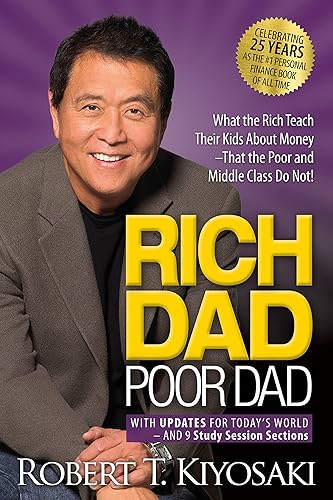
Rich Dad Poor Dad by Kiyosaki
Personal finance ideas on money and investing, for readers who want to rethink how money works for them.
Pros
- Argues that a high income is not required to build wealth
- Narrated through one author's two-father story, which gives it a clear frame
- Listed as the 2022 edition, with updated sidebars
Cons
- Centers on personal finance and investing, not on running a business
- Repeats the publisher's claims about popularity and worldwide reach
- The listing states no reading age or grade level

Money Skills for Teens
A step-by-step guide to budgeting, saving and investing for teens, suited to building money habits.
Pros
- 150 pages, independently published
- Published February 8, 2025
- Covers budgeting to investing
Cons
- No reading age stated
- No grade level stated
- Beginner focus only
As an Amazon Associate I earn from qualifying purchases.
More picks to compare
 Personal Finance for Teenagers168 pages, reading age 13-17, Book 1 of 2Check on Amazon
 Money Skills for Teens, 2 in 1249 pages, reading age 13-18, 2 books in 1Check on Amazon
 Investment Guidebook For Teens216 pages, stocks to crypto, 2nd editionCheck on Amazon
 Money Management for Teens170 pages, reading age 13-17, budgeting to investingCheck on Amazon
Compare the picks
| Book | Shelf Score | Author | Pages | Reading age | Amazon |
|---|---|---|---|---|---|
| How to Money by Chatzky | 9.8/10 | Jean Chatzky, Kathryn Tuggle | 256 | 12+, from customers | View on Amazon |
| Not a Boring Finance Book | 9.6/10 | J.P. Finnegan | 159 | Not stated | View on Amazon |
| Money Skills for Teens | 9.5/10 | Riley Wealth | 150 | Not stated | View on Amazon |
| Rich Dad Poor Dad | 9.6/10 | Robert T. Kiyosaki | Not stated | Not stated | |
| Psychology of Money | 9.7/10 | Morgan Housel | Not stated | Not stated |
Book details as published on each listing, collected 21 October 2026. One of the five states a reading age, marked as from customers.
How we scored them
The Shelf Score weighs fit for the reader, contents and edition, value, and the listed reading age or level where one is given. Only the How to Money pick states a reading age, 12+ years marked as from customers, with grade level 7 to 9; the other four state none. How we pick explains the weights.
| Book | Shelf Score | Fit /35 | Contents /25 | Value /25 | Age/level /10 |
|---|---|---|---|---|---|
| How to Money by Chatzky | 9.8 | 34 | 24 | 21 | 7 |
| Not a Boring Finance Book | 9.6 | 33 | 21 | 20 | 0 |
| Money Skills for Teens | 9.5 | 33 | 20 | 19 | 0 |
Scores run from 9.2 to 9.8: each book’s point total is placed on that range, so more points always means a higher score. Reading age or level counts on a list where at least one listing gives one, and a book whose listing gives none then scores zero on it. Where no listing gives one, the score is taken over the other 85 points. Books carry no warranty, so warranty is not scored.
How to choose the best finance books for teens
Illustrated basics or classic mindset
How to Money is a full-color illustrated guide to the basics, with a stated reading age of 12+ and grade level 7 to 9. Not a Boring Finance Book is a visual guide to the money machine. Rich Dad Poor Dad and The Psychology of Money are classics by title, suited to older teens. Match the format to the reader. For high school readers, see our best finance books for high school students.
What each one covers
How to Money covers earning, budgeting, college loans, credit cards and investing in 256 pages. Not a Boring Finance Book covers the money machine in 159 pages. Money Skills for Teens covers budgeting to investing in 150 pages. The two classics state no page counts. For the next step up, see our best finance books for college students.
Before you buy
- Check the reading age: only How to Money states one, 12+ marked as from customers.
- Check the page count: 256, 159 and 150 pages for the three with stated counts.
- Match the style: illustrated guides suit reluctant readers, classics suit motivated ones.
Frequently Asked Questions
Which is best for a complete beginner?
How to Money, a full-color illustrated guide with reading age 12+ and grade level 7 to 9.
Which is the most fun to read?
Not a Boring Finance Book for Teens, a visual guide designed to keep teens engaged.
Which states a reading age?
How to Money lists 12+ years, marked as from customers, and grade level 7 to 9. The others state none.
Related lists
See every business and money list and all nonfiction lists. Also see our best finance books for high school students.
More lists: business and money, finance books for college students, finance books for girls.